The 30 Second Version
In Florida, a roof’s lifespan can range from about 15 years to well over 50, depending on the material, how it was installed, the weather it faces, and how well it’s cared for. The entire roof system matters—not just what you see from the street. As a general guide:
| Roofing Material | General Lifespan Range |
| Asphalt shingles | About 15–30 years |
| Metal roofing | 40+ years |
| Clay tile | 50+ years for the tile itself |
But those numbers only tell part of the story. Florida’s sun, heat, humidity, heavy rain, and coastal salt all play a role in how a roof ages. With durable materials like clay tile, what you see on top can last longer than the layers underneath. That’s why age alone shouldn’t decide whether it’s time to repair or replace your roof. The real question is: How old is your roof, what shape is it in, and how well is the whole system protecting your home?
Why Is Roof Lifespan Different in Florida?
When manufacturers and contractors talk about roof lifespan, it’s tempting to treat the number like an expiration date.
Install a 30-year product. Wait 30 years. Replace it.
But real homes don’t work that way.
A roof in South Florida may spend its life exposed to intense UV radiation, high surface temperatures, humidity, frequent rain, tropical storms, and periods of high wind. Near the coast, salt exposure can create additional considerations for metal components, fasteners, flashing, and coatings. Then there are factors that have little to do with climate:
- How well was the roof installed?
- What condition was the roof deck in?
- Was the correct underlayment used?
- How well does the attic manage heat and moisture?
- Has the roof experienced storm damage?
- Were previous repairs completed correctly?
- Has routine maintenance been performed?
Two Florida homes can have the same roof installed the same year, yet see very different results over time. The material sets the stage, but the whole roof system and how it’s cared for determines how long it really lasts.
How Long Do Asphalt Shingle Roofs Last in Florida?
A well-built asphalt shingle roof in Florida often lasts 15 to 30 years, though the real number depends on the details. Gustafson Roofing works with asphalt shingles from manufacturers including:
- IKO
- GAF
- Owens Corning
- CertainTeed
Today’s asphalt shingles come in a range of styles, colors, and performance levels. Not all asphalt roofs are created equal. Florida’s climate puts shingles to the test. Years of heat and UV exposure can contribute to aging. High winds can stress shingles and their attachment. Heavy rain repeatedly tests flashing, valleys, penetrations, and drainage. Over time, homeowners may notice changes such as:
- Granule loss
- Curling or lifting
- Cracked shingles
- Missing shingles
- Exposed areas
- Deterioration around flashing or penetrations
Seeing these issues doesn’t always mean you need a whole new roof. What matters is the condition and how widespread the problem is. A localized issue on an otherwise healthy roof can be very different from widespread deterioration across a roof already approaching the later portion of its service life.
How Long Does a Metal Roof Last in Florida?
A properly installed and maintained metal roof can commonly provide 40 years or more of service. That long service life is why many Florida homeowners choose metal, even if it costs more up front than shingles.
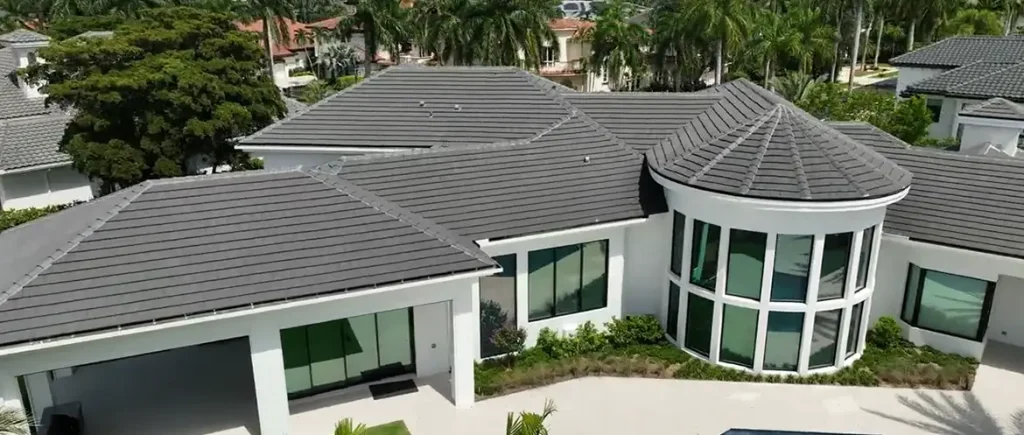
Gustafson offers metal roofing options including standing seam and corrugated panel systems, including EDCO products. Metal roofing has several characteristics that can make it attractive in Florida:
- Long service life
- Relatively low weight
- Lower routine maintenance than some materials
- No individual brittle tiles to crack
- Reflective finish options
- Compatibility with a variety of architectural styles
But even metal roofs have their limits. Its lifespan can be influenced by the type of metal, coating, fasteners, installation, roof geometry, storm exposure, maintenance, and surrounding environment.
What about metal roofs near the ocean?
Coastal conditions deserve additional consideration. Salt carried through the air can contribute to corrosion of vulnerable metals and deterioration of certain finishes.
That doesn’t mean metal roofing isn’t a smart choice for coastal Florida homes. It means the specific metal roofing system matters. Metal type, coating, compatible fasteners, manufacturer requirements, installation details, and the property’s actual exposure should all be considered.
Our guide What Does Salt Air Do to a Coastal Florida Home? goes deeper into how coastal exposure can affect roofing and other exterior materials.
How Long Does a Tile Roof Last in Florida?
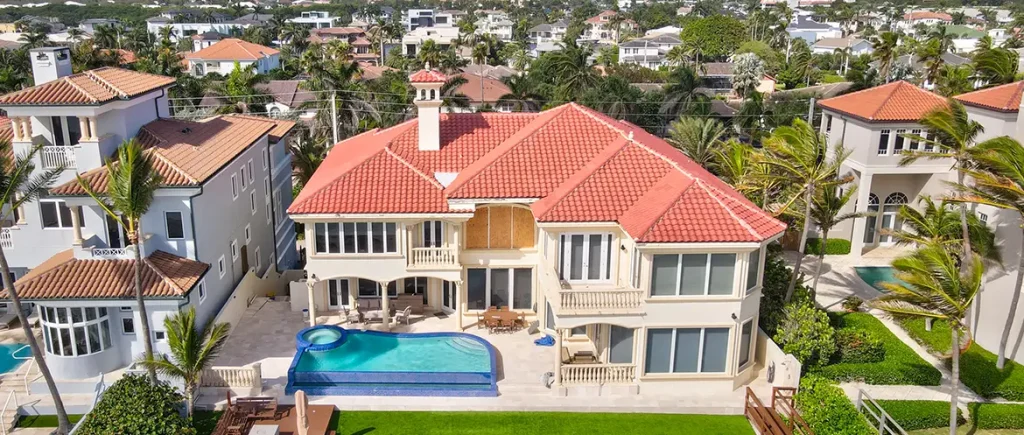
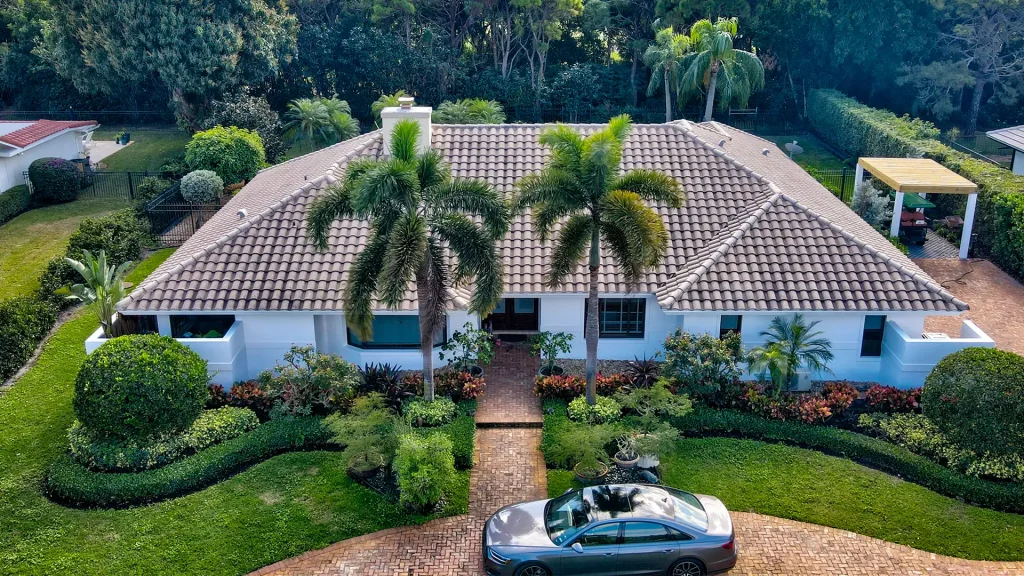
Clay tile itself can last 50 years or longer, and quality tile can remain durable for decades. Gustafson offers several clay tile styles, including:
- Spanish tile
- Mission tile
- Flat clay tile
That lasting strength is why tile roofs are a Florida classic. But there’s an important distinction every tile-roof homeowner should understand:
The tile and the roof are not the same thing.
A clay tile can remain physically sound while other components of the roof system age. Beneath and around those tiles are components such as:
- Underlayment
- Flashing
- Fasteners
- Sealants
- Vents
- Roof decking
Those parts may not last as long as the clay tiles above. So when someone says:
“A tile roof lasts 50+ years.”
That doesn’t necessarily mean:
“Nothing on this roof will need attention for 50+ years.”
That’s a key point to keep in mind when looking at an older Florida tile roof.
Which Roofing Material Lasts the Longest in Florida?
If you compare just the materials, clay tile and quality metal roofing can last much longer than standard asphalt shingles. But the longest lifespan doesn’t always mean the best roof for your home. Consider the tradeoffs:
| Priority | Asphalt Shingles | Metal | Clay Tile |
| Lower upfront investment | Strong | Lower | Lower |
| Long-term material life | Moderate | Strong | Strong |
| Lower roof weight | Strong | Strong | Lower |
| Traditional Florida appearance | Moderate | Moderate | Strong |
| Lower maintenance considerations | Moderate | Strong | Moderate |
| Easy individual-material replacement | Strong | Depends on system | Strong |
| Architectural character | Moderate | Strong | Strong |
The right material depends on the home and homeowner. Someone planning to remain in a home for decades may value longevity differently from someone expecting to sell within several years. A homeowner with a Mediterranean-style house may place more value on clay tile. Another may prioritize lower weight and reduced maintenance and prefer metal. And for someone focused on balancing upfront cost, appearance, and reliable performance, asphalt shingles may make the most sense.
Lifespan is just one piece of the puzzle.
Does Florida Heat Shorten a Roof’s Life?
Heat does speed up roof aging, but it’s important to look at what’s happening on the roof surface and inside the attic, not just the air temperature. Roofing materials can become significantly hotter than the surrounding air when exposed to direct sunlight. Over years, repeated heat and UV exposure can contribute to deterioration of certain roofing materials and finishes.
What’s happening under the roof matters just as much. Attic insulation, ventilation, air sealing, roof design, and other factors influence heat and moisture conditions within the roofing system.
That’s why looking at the outside only gives you part of the picture. A roof can look acceptable from the street while conditions beneath the surface deserve attention.
Do Hurricanes Shorten a Roof’s Lifespan?
They can, but a hurricane passing through your area doesn’t automatically subtract a set number of years from your roof.
Storm effects vary dramatically. One roof may experience no meaningful damage. Another may lose roofing material. Another may sustain damage to flashing or other components that isn’t immediately obvious from the ground.
That’s why what matters most is your roof’s condition after the storm, not just the fact that a storm happened. After significant weather, look for visible changes such as:
- Missing shingles
- Broken or displaced tiles
- Damaged metal panels
- Loose or damaged flashing
- Debris impact
- Gutter damage
- New interior water stains
- New leaks
If you don’t see any problems, you don’t need to replace your roof just because a storm passed through. But if you notice changes, it’s important to find out how serious the damage is.
Can Salt Air Shorten Roof Lifespan?
For coastal Florida homes, it can affect certain roofing components.
Salt itself doesn’t affect every material in the same way. Clay tile doesn’t corrode like metal, for example. But even a clay tile roof contains metal flashing, fasteners, and other components. With metal roofing, the particular metal, finish, fasteners, and manufacturer’s requirements become especially important.
This is another reason why general lifespan numbers don’t tell the whole story. A metal roof installed several miles inland may experience a different environment than the same type of roof directly exposed to ocean air. Where your home sits makes a difference.
Does Roof Color Affect How Long a Roof Lasts?
Color does affect how much heat your roof absorbs, but it’s not as simple as saying lighter roofs always last longer. Roof performance also depends on:
- Material
- Product formulation
- Reflective properties
- Coatings
- Roof design
- Insulation
- Ventilation
- Installation
Certain roofing products are specifically designed with reflective properties that can help reduce solar heat absorption. But picking a roof just for its color misses most of what matters. If keeping your home cooler matters to you, look at the real specs of each roofing product—not just whether it looks light or dark.
What Can Make a Florida Roof Fail Early?
Sometimes a roof reaches the end of its expected lifespan. Other times, something causes it to deteriorate sooner than expected. Common contributors can include:
Poor installation
Even the best roofing material can’t make up for poor installation. Incorrect fastening, flashing mistakes, poorly installed penetrations, or other workmanship issues can create vulnerabilities long before the roofing material itself should be worn out.
Storm damage
High winds, debris, and heavy rain can damage individual components or larger areas of a roof.
Water management problems
Roofing is designed to shed water. When valleys, flashing, gutters, penetrations, or drainage aren’t functioning correctly, water can reach places it shouldn’t.
Heat and moisture conditions
Conditions in the attic and roof assembly can affect the system from underneath.
Lack of maintenance
A small problem that’s easy to fix now can turn into a bigger headache if it’s ignored.
Improper repairs
A temporary patch can sometimes stop an immediate symptom without addressing the actual cause. A real repair fixes the problem at its source, not just the symptom.
What Are the Signs a Florida Roof Is Reaching the End of Its Life?
Age is your signal to start paying closer attention. Condition is what guides your next step. Warning signs vary by roofing material, but homeowners should watch for changes such as:
- Recurring leaks
- Widespread shingle deterioration
- Missing roofing material
- Multiple broken or displaced tiles
- Significant corrosion
- Deteriorated flashing
- Sagging or structural changes
- Repeated repairs in different areas
- Visible deterioration across large portions of the roof
One repair doesn’t mean your roof is done for. It’s the pattern that matters. If issues are small and the rest of your roof is in good shape, a repair could be the right call. But if damage is widespread and your roof is already near the end of its life, more repairs may not be worth it.
Should You Replace a Roof Just Because It’s Old?
Not always. If your roof is getting older, it’s important to know its condition, but age alone doesn’t tell the whole story. Consider two roofs:
Roof A
It’s older, but:
- The roofing material remains in good condition
- There are no active leaks
- Flashing is performing properly
- The roof has been maintained
- Problems are minimal and localized
Roof B
It’s the same age, but:
- Repairs are becoming frequent
- Deterioration is widespread
- Multiple components are aging
- Water intrusion has occurred
- The roof is becoming increasingly difficult to maintain economically
Those two homeowners might make very different choices, even if their roofs are the same age. That’s why asking how old your roof is should be the beginning of the conversation, not the end.
Repair or Replace: How Does Roof Age Affect the Decision?
Think about roof age alongside two other factors:
Condition + Scope
A useful framework looks like this:
Younger roof + isolated problem
→ Repair may make sense.
Older roof + isolated problem + otherwise healthy system
→ Repair may still make sense.
Older roof + widespread deterioration
→ Replacement becomes more reasonable to consider.
Any age + significant system failure or extensive damage
→ Evaluate the full scope rather than relying on age.
Cost matters, too. Repeatedly repairing an aging roof can eventually reach a point where you’re investing money into a system that still has several other components approaching the end of their useful lives. But replacing a roof that’s still in good shape just because of one fixable problem isn’t always the best investment either.
The goal is to find the right solution for your roof, not just follow a rule of thumb.
How Can You Help a Florida Roof Last Longer?
You can’t control the Florida weather. But you can control how quickly you act when your home shows signs of trouble. A few habits can help:
Pay attention after significant storms: You don’t have to assume there’s damage, but it pays to look for anything different.
Keep drainage functioning: Make sure gutters and downspouts move water away from your roof and home, not let it pool where it shouldn’t.
Address small problems: Fixing a broken tile or small flashing issue is much easier before water gets into other parts of your home.
Avoid unnecessary roof traffic: This matters most with tile roofs, since walking carelessly can crack tiles.
Follow manufacturer maintenance guidance: Every roofing material has its own needs, especially near the coast.
Know your roof: Know when your roof was installed, what it’s made of, and if it’s had any major repairs.
You don’t need to become a roofing expert. You just need to know enough to spot when something changes.
How Often Should You Have Your Florida Roof Checked?
There’s no single inspection schedule that fits every Florida home. How often you need a pro to check your roof depends on its age, material, storm history, coastal exposure, and any past repairs. You can do simple visual checks from the ground now and then, especially after big storms. Consider a professional evaluation when:
- You notice a leak
- Roofing material appears damaged or displaced
- A major storm may have affected the property
- Repairs are becoming more frequent
- You’re unsure of the roof’s history
- You’re buying or selling a home
- The roof is older and you want to understand its current condition
The point of an inspection isn’t to find a reason to replace your roof. It’s to find out what shape your roof is really in.
Frequently Asked Questions
How long does a shingle roof last in Florida?
Asphalt shingle roofs commonly provide roughly 15 to 30 years of service, although actual lifespan depends on the specific product, installation, weather exposure, maintenance, ventilation, and storm history.
How long does a metal roof last in Florida?
A properly installed and maintained metal roofing system can commonly last 40 years or longer. Metal type, coating, installation, coastal exposure, storms, and maintenance can influence its actual service life.
How long does a tile roof last in Florida?
Clay tile itself can last 50 years or longer. However, the underlayment, flashing, fasteners, and other parts of the roofing system may require attention before the tiles themselves reach the end of their useful life.
Is a 20-year-old roof too old in Florida?
Not necessarily. Twenty years means something very different for an asphalt shingle roof than it does for metal or clay tile. Material, condition, installation, maintenance, and storm history should all be considered.
Should I replace my roof before it starts leaking?
A roof doesn’t necessarily need to leak before replacement makes sense, but age alone shouldn’t automatically trigger replacement either. Widespread deterioration, repeated repairs, failing components, and overall system condition provide more useful information.
Can a Florida roof last 30 years?
Yes. Many roofing systems can reach or exceed 30 years under appropriate conditions, particularly metal and tile. Some quality asphalt shingle roofs may also reach that range, depending on the product, installation, exposure, and maintenance.
Your Roof Doesn’t Have an Expiration Date
Lifespan estimates are helpful. They help you know if your roof is still young, getting to the age where it needs more attention, or past what’s typical for that material. But they aren’t deadlines for replacement.
At Gustafson Roofing, Powered by Stronghouse, we believe the best way is to look at the whole picture:
Material. Age. Condition. Installation. Environment. Maintenance.
If your roof is getting older, you don’t have to jump straight to replacement. Start by understanding what you have and how well it’s working. Then you can decide whether to repair or replace based on your real roof, not just its age.