
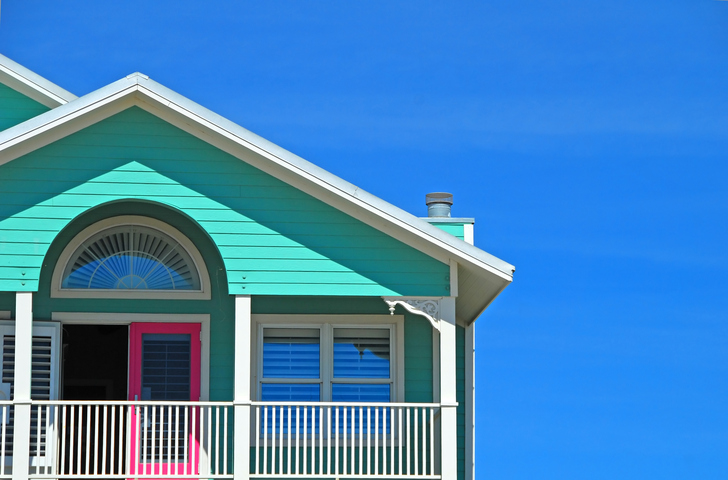
Executive Summary: For Florida homes, a high-quality 100% acrylic exterior paint is a reliable choice. It stands up to UV, moisture, fading, cracking, and peeling, and stays flexible as your home’s exterior shifts with the weather. But picking the right paint takes more than just spotting the word ‘acrylic’ on a label. Florida homes take a beating from sun, heat, humidity, heavy rain, and salt near the coast. The surface, previous paint, prep work, primer, paint quality, color, and how it’s applied all play a part in how long your paint job lasts.Latex and oil-based paints still have their place, depending on the surface and the job. There’s no one-size-fits-all answer.The key is matching the right paint system to your home’s surface and the Florida climate.
Why Is Florida So Hard on Exterior Paint?
Exterior paint has two jobs. It should make your home look great and protect what’s underneath. Florida puts that finish to the test. A painted exterior may regularly encounter:
- Intense UV exposure
- High temperatures
- Humidity
- Heavy rain
- Wind-driven rain
- Rapid weather changes
- Biological growth
- Salt exposure near the coast
These conditions won’t ruin your paint overnight. But over time, they wear down color, adhesion, flexibility, and the finish itself. That’s why a paint that works up north might not cut it on a South Florida home.
What Is the Best Exterior Paint for a Florida Home?
For most exteriors, starting with a high-quality 100% acrylic paint is a smart move. Water-based acrylics are durable, flexible, hold their color, dry quickly, and resist fading, cracking, and peeling. Flexibility matters outdoors. Your home’s exterior moves with heat, moisture, and weather. The right paint needs to flex with it, not crack or peel at the first sign of change.
But here’s the important part:
The best paint for Florida isn’t always the best paint for every surface on your home. Stucco, masonry, wood, metal, doors, trim, and old paint all need their own prep and paint systems. That’s why your surface should guide your paint choice, not just the weather.
Acrylic vs. Latex vs. Oil-Based Paint: What’s the Difference?
The terminology around paint can become confusing quickly, especially because “latex” is often used broadly for modern water-based paints. It’s more helpful to know how each type of paint actually performs on your home.
|
Paint Type
|
Common Strengths | Potential Considerations | Common Uses |
| 100% Acrylic | Flexible, durable, good color retention, weather resistant | Quality varies by product | Many exterior walls, siding and other properly prepared surfaces |
| Latex / Water-Based | Fast drying, low odor, easy cleanup, versatile | Product formulation matters | Interior and exterior applications depending on product |
| Oil-Based | Hard, smooth finish with strong adhesion | Slower drying, less flexible, more difficult cleanup | Certain doors, trim, metal and specialty applications |
Don’t think of these paint types as a simple best-to-worst list. A quality paint that fits your surface and is applied right will outlast any product picked just for its label.
Why Does Acrylic Paint Work Well in Florida?
Florida’s sun and moisture make flexibility and weather resistance essential.
It can handle exterior movement
When your home heats up and cools down, materials expand and contract. Acrylic paints stay flexible, so they move with your home instead of cracking under pressure. That doesn’t mean acrylic never cracks. If the surface underneath is damaged or moves too much, paint alone won’t fix the problem.
It offers good UV and color performance
Florida sun is relentless. Over time, UV rays fade and wear down exterior paint. Quality acrylic paints are made to resist fading and keep their color, even after years outdoors. Color and pigment quality still matter. That’s why two homes painted the same day can age differently.
It handles moisture well when properly applied
Florida homes face humidity and rain all the time. Acrylic paints resist moisture but still let your walls breathe when used on the right surfaces. But paint should never hide an active moisture problem. If water is getting in behind siding, damaged stucco, or windows, another coat of paint won’t solve it.
Is Latex Paint Good for Florida Exteriors?
Sometimes, yes. The term latex paint generally refers to water-based coatings, and many modern exterior paints marketed as latex use acrylic resins in their formulation.
That’s why you shouldn’t pick paint just because it says ‘latex.’ Instead, check what the paint is actually made to do. Questions worth asking include:
- Is it rated for exterior use?
- What surfaces is it intended for?
- Is it 100% acrylic or an acrylic blend?
- Does the manufacturer recommend a primer?
- How does it perform in high-moisture environments?
- What preparation does the manufacturer require?
- Is it appropriate for the existing coating?
The formula matters more than the category name.
Is Oil-Based Paint Good for Florida?
Oil-based paint still has its uses, but it’s rarely the best choice for painting a whole Florida home. Oil-based coatings cure to a hard, smooth finish and can provide excellent adhesion and wear resistance. That can make them useful for certain:
- Doors
- Trim
- Metal surfaces
- Railings
- Specialty applications
But that same hardness can be a problem on surfaces that expand and contract a lot. Oil-based paints also dry slowly and need special cleaners for cleanup. The right question is therefore not:
“Is oil-based paint bad?”
It’s:
“Is oil-based paint appropriate for this particular surface?”
Sometimes the answer is yes. For big exterior walls, a quality acrylic paint is usually the smarter choice.
Does the Surface of Your Home Change Which Paint You Need?
Definitely. This is one of the most important steps in picking exterior paint.
Stucco and masonry
Stucco is common throughout Florida, and painting it requires attention to the condition and moisture level of the surface. Cracks, water intrusion, efflorescence, chalking, or other deterioration should be addressed before applying a new finish. Fresh masonry and old stucco each need their own prep. A new coat of paint should be the last step, not a way to cover up a problem.
Wood
Wood needs to be protected from moisture, but it also needs to move naturally. Check for peeling, rot, exposed wood, failed caulk, and old paint before you repaint. If the wood under the paint is rotting, another coat won’t fix it.
Metal
Metal needs coatings and primers made for its type and condition. Corrosion needs special attention. Painting over rust or corrosion without proper prep just leaves the problem hiding under new paint.
Vinyl siding
You can sometimes paint vinyl siding, but picking the right product and color is key. Vinyl reacts to heat, so switching to a much darker color can make it absorb more heat than it was built for. If you paint vinyl, use the right paint and color for the job, and follow the manufacturer’s instructions.
What Exterior Paint Holds Up Best Near the Florida Coast?
Coastal homes face another challenge: salt.
Salt particles carried through the air can settle on exterior walls, trim, doors, windows, metal components, and other surfaces. Salt buildup can damage finishes and speed up corrosion on metal.
For coastal homes, a tough acrylic paint can work well, but prep is even more important. Painting over salt, dirt, mildew, loose paint, or corrosion gives you a weak foundation. Even the best paint will fail if it can’t bond to what’s underneath.
For coastal homes, think of paint performance as:
Product + Preparation + Surface + Environment
Skip any step, and your paint job won’t last as long.
Why Does Exterior Paint Fade So Fast in Florida?
When people say their paint ‘failed,’ it can mean a few things.
Sometimes the paint still sticks, but the color has faded. Florida’s strong UV rays slowly break down pigments and change how your paint looks. Other factors can influence fading too, including:
- Paint quality
- Pigment quality
- Color selection
- Direction of sun exposure
- Surface temperature
- Previous coating
- Application thickness
- Age
Even different sides of your house can fade at different speeds. A wall that gets afternoon sun will age differently than one in the shade. That doesn’t mean the paint was bad. It just shows how much sun exposure matters in Florida.
Why Does Exterior Paint Peel in Florida?
Peeling is a different problem than fading. When paint starts peeling away, there’s usually a reason worth finding. Possible contributors include:
- Moisture behind the coating
- Poor surface preparation
- Painting over a dirty or chalky surface
- Incompatible coatings
- Missing or incorrect primer
- Painting before a surface was sufficiently dry
- Existing coating failure
- Water intrusion
- Improper application
That’s why just painting over peeling spots often leads to the same problem again. Before you repaint, find out why the old paint stopped sticking. If moisture is coming in from behind the wall or elsewhere, fix that first.
Does Paint Color Matter in Florida?
Yes, for how your home looks and how the paint holds up. Darker colors soak up more sun than lighter ones, which can make surfaces hotter.
That doesn’t mean every Florida home needs to be white. It means you should consider color along with the material, sun exposure, style, and what the paint is made for.
Some paints also have limits on which colors you can safely use. Vinyl siding is a good example. Switching to a much darker color can make it absorb more heat, so make sure the paint and color are approved for vinyl.
Color isn’t just about looks. On some surfaces, it’s a performance decision too.
Is Expensive Exterior Paint Worth It in Florida?
Paying more doesn’t always mean you get better results. But there are real differences between basic and premium paints, like:
- Resin quality
- Pigments
- Color retention
- Coverage
- Flexibility
- Adhesion
- Mildew resistance
- Weather resistance
In Florida, picking the cheapest paint can cost you more in the long run. But there’s another side to the story. Premium paint on a poorly prepped surface is still a bad paint job.
If you have to choose where to spend, don’t overlook the value of good cleaning, repairs, prep, priming, and application. The paint itself is just one part of the whole system.
What Matters More: The Paint or the Preparation?
Both matter, but prep is often the reason a good paint job lasts or fails.
Think of painting like roofing. You wouldn’t judge a roof just by the shingles you see. The underlayment, flashing, fasteners, and installation all matter too.
Paint works the same way. The final color is what you see. Underneath it may be:
- Topcoat
- Primer
- Properly prepared surface
- Sound exterior material
If the foundation is failing, a premium topcoat won’t fix it. That’s especially true in Florida, where hidden moisture often causes peeling or blistering paint.
How Can You Make Exterior Paint Last Longer in Florida?
The best results start before you even open the first can.
Choose a coating made for the surface
There’s no one-size-fits-all paint. Match the product to stucco, wood, metal, siding, trim, or whatever you’re painting.
Prepare the surface correctly
Clean off anything that could keep paint from sticking—dirt, loose paint, chalk, mildew, or corrosion.
Fix underlying problems first
Don’t just cover up cracks, rot, water leaks, or damaged siding with new paint.
Use the correct primer when required
Some surfaces need a special primer before you paint.
Follow application requirements
Temperature, moisture, drying time, coverage, and how you apply the paint all affect how it holds up.
Maintain the exterior after painting
Regular cleaning and inspections help you catch small issues before they become big paint problems.
Acrylic, Latex or Oil-Based: Which Should You Choose?
For most Florida homeowners, here’s how to keep it simple:
Painting large exterior wall areas?
Start with a quality 100% acrylic exterior paint that fits your surface.
Painting a specialty surface such as certain doors, trim, or metal?
A different paint—sometimes even oil-based—might be the right call.
Painting previously coated material?
Find out what’s already on the surface and make sure your new paint will work with it.
Painting a coastal home?
Pay extra attention to cleaning, salt buildup, corrosion, and what products are recommended for your home’s exposure.
Seeing peeling, blistering, or recurring failure?
Find the real cause before you repaint.
That’s more helpful than picking one type of paint as ‘the best’ for every Florida home.
Frequently Asked Questions
What is the best exterior paint for Florida heat?
A high-quality 100% acrylic exterior coating is often a strong choice because of its flexibility, weather resistance, and color retention. The correct product still depends on the surface being painted and its existing condition.
Is acrylic or latex paint better for a Florida exterior?
The terms can overlap because many modern latex paints use acrylic resins. Rather than relying solely on the category name, look at the specific formulation, whether it’s intended for exterior use, its recommended surfaces, and the manufacturer’s performance and preparation requirements.
Is oil-based paint good for exterior use in Florida?
Oil-based coatings can be appropriate for certain doors, trim, metal surfaces, and specialty applications. They’re generally not the default choice for large exterior wall areas where the flexibility of acrylic coatings can be advantageous.
What paint is best for Florida stucco?
A quality exterior coating specifically intended for masonry or stucco can work well. The condition of the stucco matters just as much as the paint. Cracks, moisture problems, chalking, or other deterioration should be addressed before repainting.
What type of paint is best for coastal Florida?
Durable exterior acrylic coatings can be a strong option for many coastal surfaces, but coastal exposure makes preparation especially important. Salt residue, corrosion, mildew, dirt, and failing coatings should be properly addressed before new paint is applied.
Why does my Florida home’s exterior paint keep peeling?
Recurring peeling can indicate moisture, inadequate preparation, incompatible coatings, missing primer, a deteriorating substrate, or another underlying issue. Determine why the coating is losing adhesion before simply adding another coat.
Choosing Exterior Paint for a Florida Home
If you remember one thing about painting in Florida, let it be this:
The best exterior paint isn’t just a color or a brand. It’s a whole system.
A high-quality acrylic paint is a great choice for many Florida homes, but even the best paint needs a solid surface, good prep, the right primer, and proper application.
At Gustafson Roofing, Powered by Stronghouse, we believe you should know what’s really going on with your exterior before you decide how to fix it. Sometimes, a faded wall just needs a fresh coat. Other times, peeling or blistering means there’s a bigger problem underneath.
Knowing the difference helps you invest in the solution your home really needs.